Concrete, brick, tiles, wood, metal, plasterboard and mixed renovation waste. Clear lists of what we take and what we don't.
Construction waste is not one material, which is why the price cannot be a single number. A cubic metre of concrete weighs up to two tonnes; a cubic metre of wood ten times less. A truck fills with concrete at a cubic metre and a half, with wood at ten. Below is the full list of what we take, what each material weighs, and an honest list of what we do not take and why.
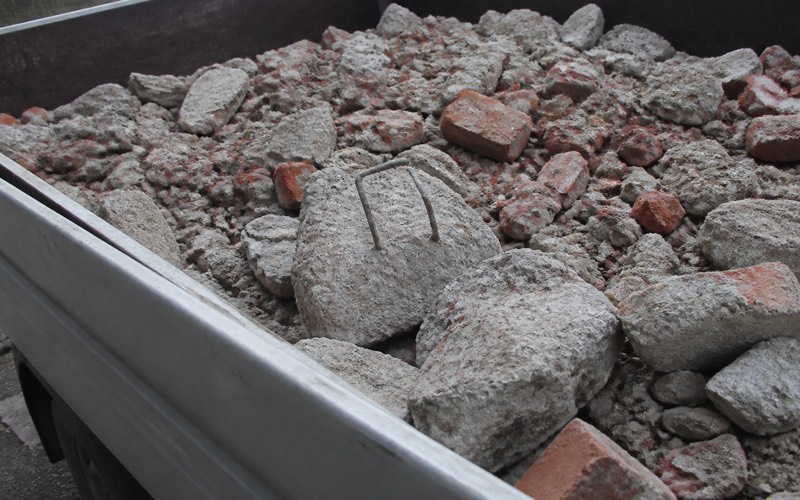
The heaviest materials. Weight limits the load, not volume — several trips are often needed even for a modest amount.
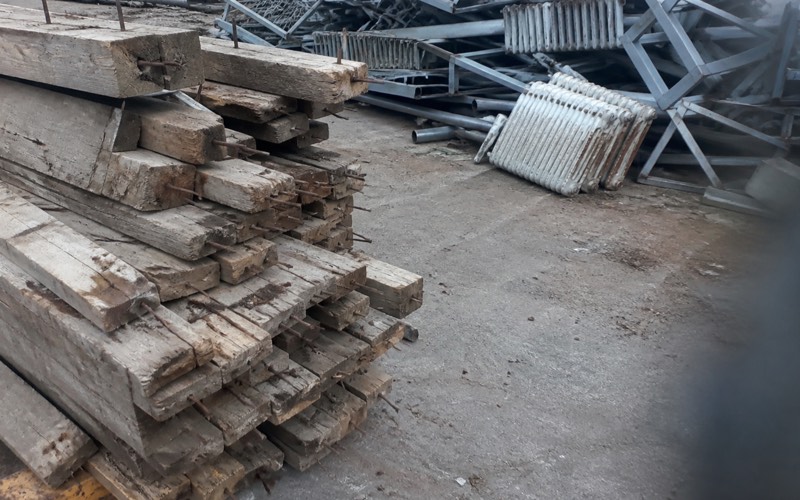
Light materials that take up a lot of room. Considerably more fits into a single load.
Ferrous and non-ferrous metals go separately. In larger quantities that can bring the overall price down.
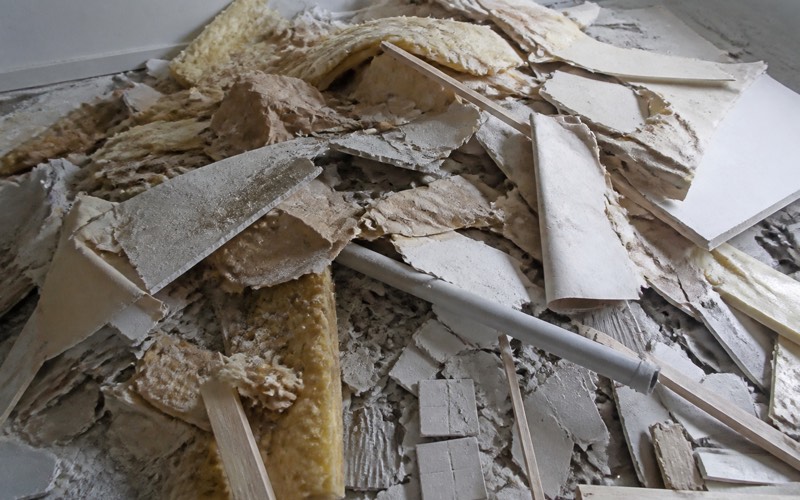
The most common case — tiles, wallpaper, skirting and mortar together. The price sits in between, so we work it out from photos.
Fill in the request form and add a few photos. We will reply within 5 minutes.
The crew arrives at a time you choose — often the same day or the next.
We work the price out from the photos and agree it with you. We only start once you have confirmed.
We work cleanly and tidy up after ourselves.
We take requests through the form
Add a few photos — we reply within 5 minutes with a price.
Book a collectionThis table explains almost everything about what removal costs. A truck has two limits — volume and permitted weight — and with heavy materials the weight runs out first.
| Material | Weight per m³ | Fits in a 3.5 t truck | Limited by |
|---|---|---|---|
| Concrete, reinforced concrete | 1800–2400 kg | around 1.5 m³ | Weight |
| Brick, masonry rubble | 1300–1800 kg | around 2 m³ | Weight |
| Tiles with mortar | 1200–1600 kg | around 2.2 m³ | Weight |
| Floor screed | 1400–1800 kg | around 2 m³ | Weight |
| Soil, subsoil | 1400–1900 kg | around 2 m³ | Weight |
| Mixed renovation waste | 400–700 kg | 5–8 m³ | Both |
| Plasterboard | 300–500 kg | 7–10 m³ | Volume |
| Wood, boards, skirting | 200–400 kg | 10–15 m³ | Volume |
| Insulation, mineral wool | 50–150 kg | 15+ m³ | Volume |
| Packaging, sheeting, cardboard | 50–100 kg | 15+ m³ | Volume |
The figures are indicative and depend on how damp and how compacted the material is.
We do not take these — not because we would rather not, but because they have their own legally defined route. If you are not sure what you have, add a photo to the form.
Old roofing sheet, asbestos cement panels, some old insulation and adhesives. Asbestos is hazardous waste, and collecting and disposing of it needs a separate licence and equipment. What to look for: old grey corrugated sheeting or panels from Soviet-era buildings.
Leftover paint and varnish, solvents, fuel, oils, batteries, acids. Hazardous waste, and they must go to a designated collection point — even if it is only a few tins.
Car tyres have their own disposal route, and most construction waste facilities will not take them. They can usually go to a tyre depot or a sorted waste site.
Medicines, needles, medical devices. These go to a pharmacy or a designated collection point.
Even empty gas cylinders and pressurised aerosol containers are an explosion risk and cannot go in a general load.
Add a photo to the form. We will say at once whether we can take it and, if not, where it can go. Free, and it takes a couple of minutes.
Fill in the form and our specialist will get back to you shortly.
Fill in the form and we will reply within 5 minutes!
We have received it. We will be in touch within 5 minutes.